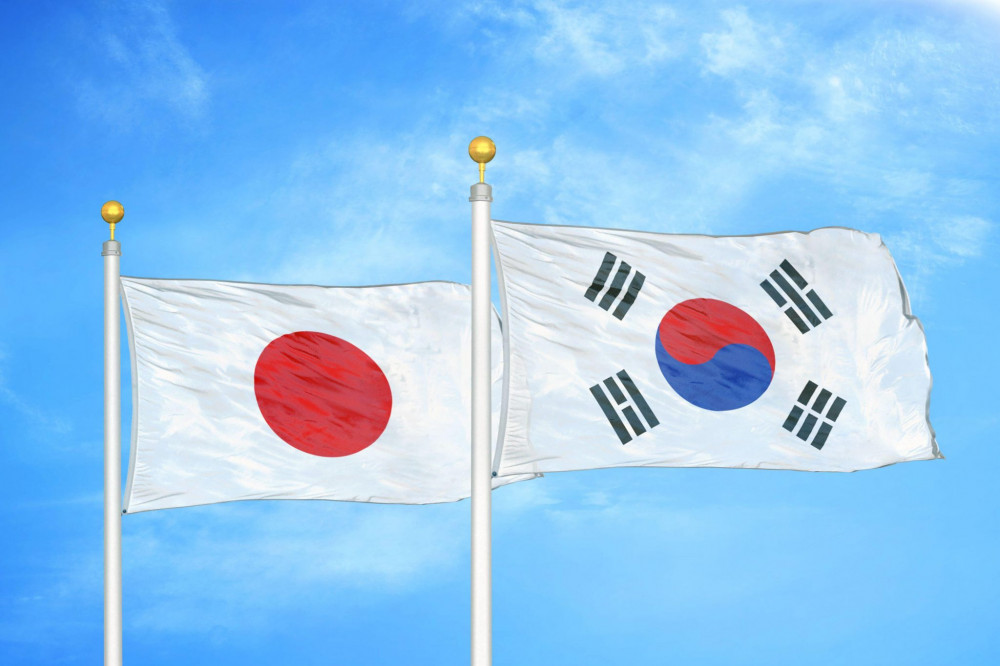
It has been more than a decade since Korean culture made huge advances in East Asia and in other Asian countries. The media and scholars have dubbed such a phenomenon the “Korean Wave” (Hallyu in Korean) for Korean cultural products such as songs, TV dramas, movies, and audiovisuals in general, becoming so popular in these countries.
The Hallyu boom in Japan was first ignited by a 2004 TV drama, Winter Sonata, when Japanese women were in love with Yon-Sama (Bae Yong-Joon) and has since attracted a lot of academic attention, because Japan is the first modernized or westernized country in Asia and Japanese popular culture has been dominant in many East Asian countries for several decades. Korea is no exception; its popular culture has also been heavily influenced by Japanese pop culture. Now at least some members of the Japanese population are fascinated with Korean popular culture.
Japanese popular culture, however, has been popular since 1970 in a few East Asian countries such as Taiwan, Hong Kong, and Singapore. At first, audiences of Japanese popular culture in these countries were limited to a minority of enthusiasts but became widespread in the 1990s, especially among young people. At that time, the Japanese cultural industry, which had been mostly inward-looking because its domestic market was large enough to support it, began to search for overseas cultural markets. Paradoxically, the popularity of Japanese popular culture began to wane by then (Iwabuchi 2002).
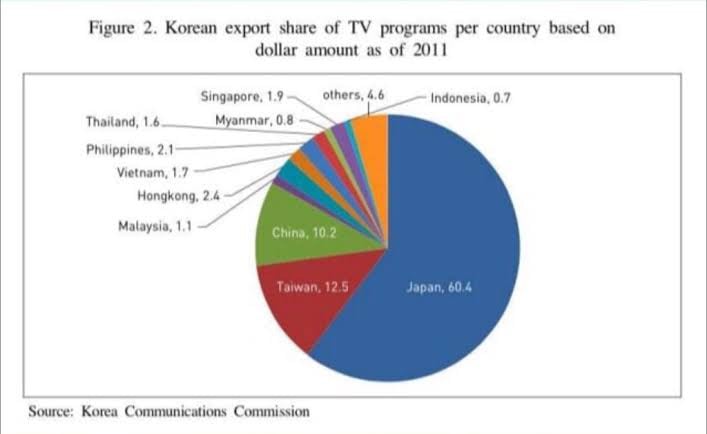
Concurrently, a few Korean popular singers gained fame in Japan even before 1998, and some Korean films, such as Shiri, were well-received by the Japanese audience in the early 2000s (Kyeong-mi Shin 2006). A series of events, including the 1988 Seoul Olympic Games and the 2002 FIFA Korea-Japan World Cup, also helped change Korea’s image in Japan, and the otherwise sore relationship between the two countries turned into a more friendly one (Mori 2008). Above all, it was the television drama series Winter Sonata that raised Hallyu to its zenith in Japan. It was aired in 2003 by NHK satellite and rebroadcasted in 2004 by NHK free-to-air station in response to overwhelming audience ratings. It has had far-reaching effects on Japanese reception of Korean popular culture since then; in 2004 alone, 29 Korean movies were screened in Japan, and 63 terrestrial television stations out of a total of 127 broadcast 70 Korean dramas in early 2005 (Kyeong-mi Shin 2006, p. 234). Each of these reasons may have contributed to the rise of Hallyu in Japan to a certain extent.
Sources: Jonghoe Yang | Sungkyunkwan University
SEE ALSO: Beloved food show concludes first season following host Huh Young Man's accident
SEE ALSO: Ok Hee, Seoul Sisters leader and early Korean pop pioneer, dies at 73
No articles to show.